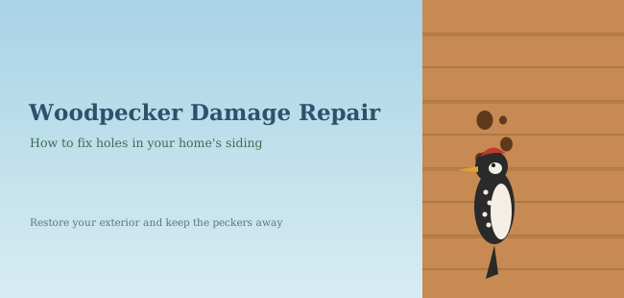
That rapid knocking on your wall is not a visitor at the door. It is a woodpecker, and it may be drilling right through your siding. In Calgary, these birds are a common headache, so fast woodpecker damage repair protects your home from water and costly pests.
The good news is that most holes are fixable. This guide explains the damage, how to repair it, and how to keep the birds from coming back.
Why Woodpeckers Damage Home Exteriors
Woodpeckers do not peck to annoy you, even if it feels that way at 6 a.m. They have real reasons, and knowing them helps you stop the damage.
Birds drum on walls to mark territory, and they dig into siding to find insects. Others carve out larger holes for nesting or roosting.
In Alberta, the Northern Flicker is the usual culprit. Wood and cedar siding are common targets, though the stucco on many Calgary homes gets hit too.
Common Types of Woodpecker Damage to Siding
Not all damage looks the same. Spotting the type helps you choose the right fix for your woodpecker holes in siding.
- Shallow drumming marks, which are cosmetic dents from territorial tapping.
- Small foraging holes, often in clusters, where a bird hunts for insects.
- Large nesting cavities, deep holes that can expose the wall behind the siding.
Small marks are mostly a looks problem. Deep cavities are serious, since they let in rain and invite mold or rot.
How to Repair Small and Large Woodpecker Holes
The right way to repair woodpecker damage depends on the size of the hole. Here is how to handle each one.
Fixing Small Holes and Surface Marks
For small holes, clean out any loose debris first. Then fill the gap with exterior wood filler or epoxy, let it cure, and sand it smooth.
Finish with primer and paint that matches your siding. Done well, this siding hole repair disappears into the wall.
Fixing Large Holes and Deep Cavities
Large cavities usually need more than filler. The damaged board or panel often has to be cut out and replaced with a matching piece.
Seal the new section with caulk, then prime and paint. This keeps water out and restores the wall’s strength.
Choosing the Right Materials for Siding Repairs
The best repair uses materials that match your home. The wrong patch stands out and often fails sooner.
For filling, use an exterior-grade wood filler or a two-part epoxy that flexes with the weather. These hold up far better than basic indoor putty, which matters through an Alberta winter.
For replacement, match your siding type, whether that is cedar, fiber cement, or stucco. A close match in color and texture makes the fix nearly invisible.
When to Replace Damaged Siding Instead of Repairing It
Sometimes a patch is not enough. Knowing when to replace saves you from repeating the work.
Replace a board when the damage is serious, widespread, or hiding soft, rotten wood. Several holes close together can weaken a panel beyond a simple fill.
If you see signs of water inside the wall, act fast. Replacing one board now is cheaper than fixing framing or insulation later.
How Professional Woodpecker Damage Repair Works
A pro brings speed and a lasting result. The process is usually straightforward.
It starts with an inspection of the holes and the wall behind them. A specialist also checks for insects, since hidden bugs often draw the birds in.
From there, the team fills or replaces the siding, then matches the finish. A Calgary crew like Alberta Pargin can also add humane deterrents, so your repair stays intact.
Preventing Woodpeckers From Returning
A fresh repair is only half the job. Keep the birds away, or they may drill the very same spot again.
- Hang visual deterrents like reflective tape or shiny objects that move in the wind.
- Install netting or mesh over favorite pecking areas to block access.
- Treat any insect problem, since fewer bugs mean less reason to peck.
One important note. In Alberta, woodpeckers are protected under wildlife law, so you cannot harm them. Stick to humane, non-lethal deterrents only.
Frequently Asked Questions
Why are woodpeckers pecking at my house?
Woodpeckers peck to mark their territory, to find insects in the wood, or to build a nest. In Calgary, the Northern Flicker is the common offender. If a bird keeps returning to one spot, hidden insects are often the cause, so a pest check is a smart first step.
Can I fix woodpecker holes in siding myself?
Small holes are a reasonable DIY job using exterior wood filler, primer, and matching paint. Large cavities or any sign of rot are best left to a professional, since they often need a board replaced and the wall behind it checked for damage.
How do I stop woodpeckers from coming back?
Combine a solid repair with humane deterrents like reflective tape and netting, and remove the insects that attract them. Because woodpeckers are protected in Alberta, use only non-lethal methods to encourage them to move along.
Restore Your Home’s Exterior and Prevent Future Damage
Woodpecker damage starts small, but it rarely stays that way. A quick repair, the right materials, and a few deterrents keep your siding strong and your home protected.
If the holes are deep or keep coming back, Alberta Pargin’s woodpecker damage repair service can inspect and repair your exterior, then add bird deterrents in one visit.
Ready to protect your siding? Contact the Alberta Pargin team or call 587-917-7095 to book an inspection in Calgary.
