Not all siding stands up to a woodpecker the same way. The material on your walls decides how much damage a bird can do and how you fix it. Woodpecker holes in wood siding look very different from the marks on fiber cement.
Knowing the difference helps you choose the right repair. This guide compares the two materials, the damage they take, and the smartest way to put things right in Calgary.
How Siding Materials Affect Woodpecker Damage
A woodpecker’s beak is a tool, and soft materials give way easily. Hard surfaces resist it, so the type of siding is the single biggest factor in how much harm a bird causes.
Wood invites pecking, while fiber cement shrugs most of it off. That gap shapes the whole siding damage repair, from the size of the hole to the cost of the fix.
Why Wood Siding Can Be Vulnerable to Pecking
Wood is soft, natural, and easy to drill into. To a woodpecker, a cedar or pine wall can feel much like a tree, which is exactly what it is hunting for.
Birds often peck wood for three reasons. They dig for insects inside it, drum to claim territory, or carve a cavity to nest, and each one leaves its own mark.
In Calgary, the Northern Flicker is a frequent culprit. Left alone, a small hole lets in rain and pests, which turns simple wood siding hole repair into a bigger job.
Can Woodpeckers Damage Fiber Cement Siding?
Fiber cement is a different story. Made from cement, sand, and cellulose fibers, it is far too hard for a beak to bore into.
That does not mean birds never touch it. A woodpecker may still drum on fiber cement to make noise, but it rarely leaves more than surface marks.
True fiber cement siding woodpecker damage is uncommon. When it happens, it is usually cosmetic, like a chip in the paint rather than a hole through the board.
Comparing Damage Patterns Across Siding Materials
Different materials fail in different ways. The table below shows what to expect from each, and how repairs generally differ:
| Siding Material | Risk From Woodpeckers | Typical Repair |
| Wood or cedar | High, soft and easy to bore | Fill small holes or replace boards |
| Fiber cement | Low, too hard to penetrate | Touch up paint, rarely replace |
| Stucco or foam (EIFS) | High, soft foam beneath | Specialist patch and refinish |
| Vinyl or metal | Low to moderate | Replace cracked panels |
The pattern is clear. Soft materials take deep holes, while hard ones take light, surface marks, so the repair scales to the material.
Repairing Holes in Wood Siding
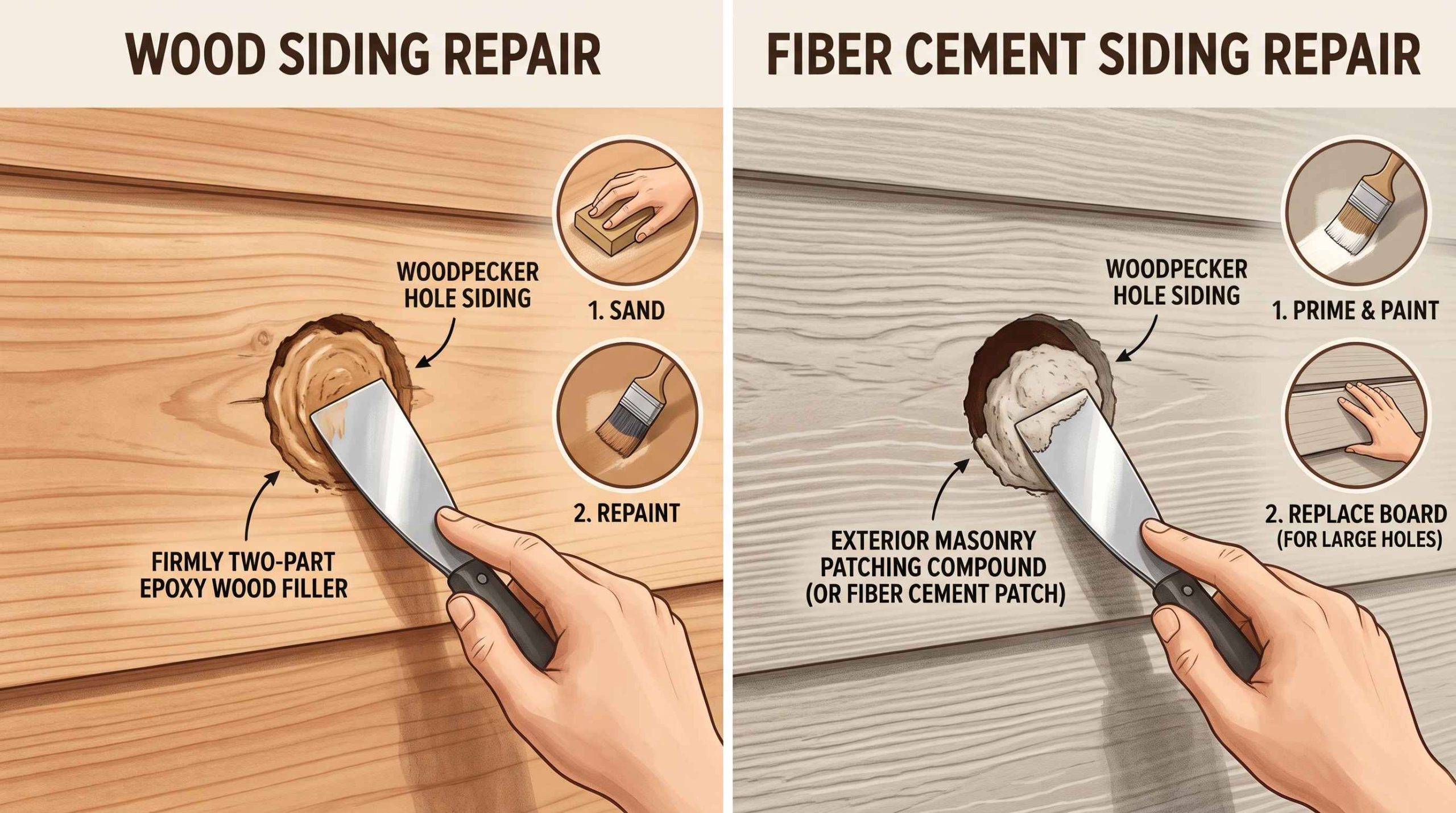
Small wood holes are often a straightforward fix. The damaged area is cleaned out, filled with exterior wood filler or epoxy, then sanded smooth.
Paint seals the repair and blends it in. For a lasting result, the filler must be weatherproof, since Calgary’s freeze-thaw cycles test every patch.
Bigger holes need more than filler. When the wood is cracked or rotted, replacing the board is the only way to keep the wall sound and watertight.
Repairing Damaged Fiber Cement Siding
Fiber cement rarely needs much. Since most marks are cosmetic, a cleaning and a fresh coat of paint often restore the look completely.
A chipped surface can be patched. A cement-based filler fills the spot, then paint matches it to the rest of the wall, and the board stays in place.
Full replacement is seldom required. Only a cracked or broken panel calls for swapping, which is a bigger job best left to a siding professional.
Repair Costs and Material Considerations
Cost follows the damage, not just the material. Filling a few small holes is inexpensive, while replacing boards or panels costs more in both parts and labour.
Material still matters for the long run. Fiber cement costs more up front, but its resistance to pecking and weather can save money over the years.
For an accurate figure, an on-site look is best. A professional can size up the damage and the siding type, then give a clear quote for the repair.
When to Replace Individual Siding Boards or Panels
Sometimes a patch is not enough. Deep holes, rot, or cracks that run across a board mean replacement is the safer choice.
Replacing one board or panel is common and practical. A matching piece is fitted and sealed, which restores both the look and the weather protection.
Repeated damage is a sign to act. If the same spot keeps getting hit, pairing a repair with bird-proofing stops the cycle for good.
Frequently Asked Questions
H3: Can woodpeckers peck through fiber cement siding?
No, not usually. Fiber cement is made from cement and fibers, which is far too hard for a woodpecker to bore into. Birds may drum on it, but they rarely cause more than minor surface or paint marks, not holes.
H3: How do you repair woodpecker holes in wood siding?
Small holes are cleaned, filled with exterior wood filler or epoxy, sanded, and painted to seal them. Larger or rotted areas need the board replaced. In Calgary, use weatherproof materials so the repair holds up through freeze-thaw cycles.
H3: Is fiber cement siding worth it to prevent woodpecker damage?
For homes with repeat woodpecker problems, often yes. Fiber cement resists pecking, rot, and harsh weather, which can lower long-term repair costs. It costs more up front, so weigh that against the savings and peace of mind.
Choosing the Right Repair for Your Home’s Exterior
The best repair depends on your siding and the damage it has taken. Wood needs careful filling or board replacement, while fiber cement usually needs little more than paint. Either way, prompt action keeps a small problem from spreading.
Dealing with woodpecker damage on your siding? Alberta Pargin’s woodpecker damage repair service can assess the material and fix it right in Calgary.
Not sure which repair you need? Contact the Alberta Pargin team or call 587-917-7095 for an inspection.
