
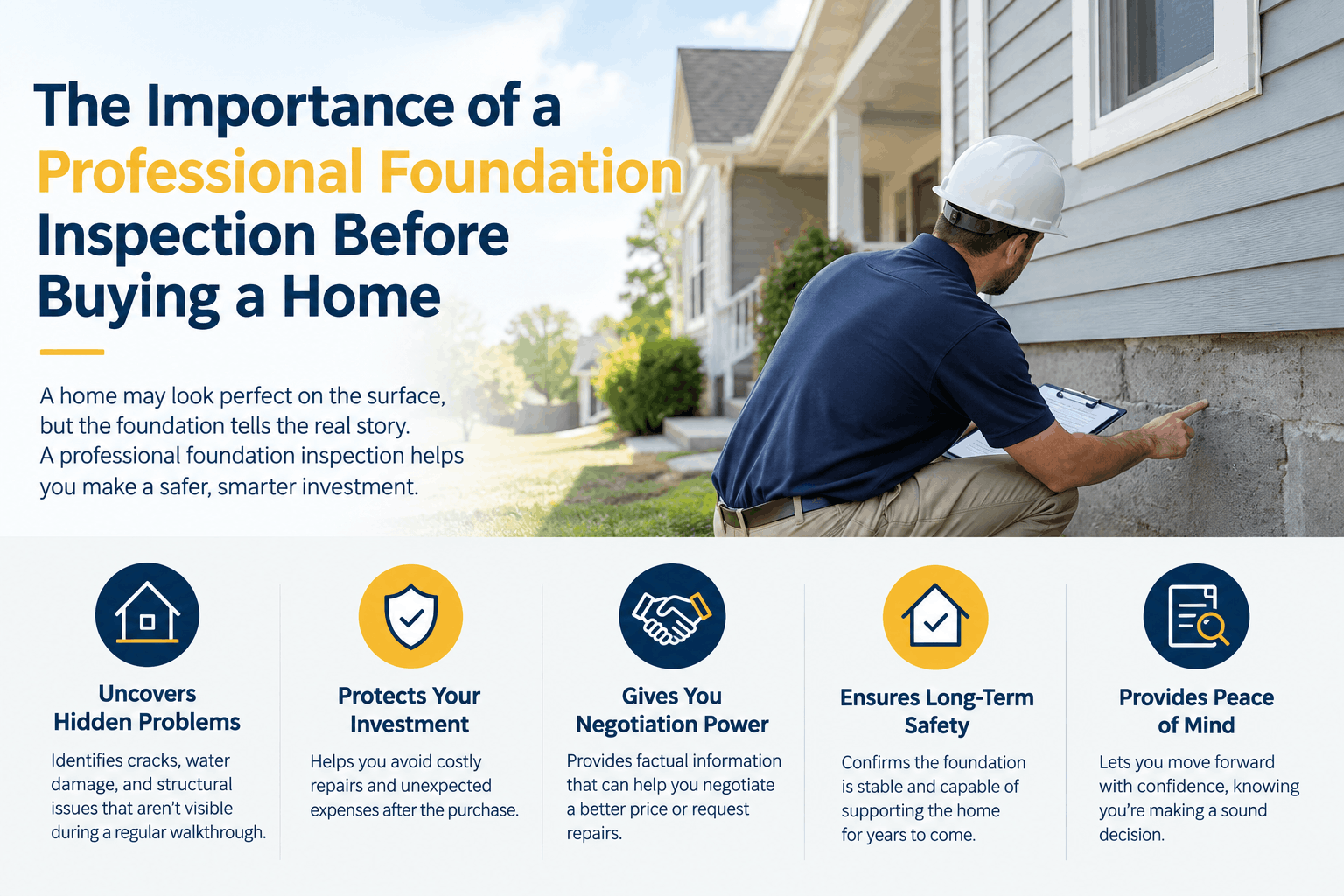
Buying a home is likely the biggest purchase of your life. A foundation inspection before buying a home protects that investment from hidden and expensive damage.
The foundation holds up everything above it. In Calgary, where clay soil and frost heave are common, a careful look underneath is not optional.
Why Foundation Inspections Matter During Home Buying
A pretty kitchen can hide a cracking basement. A standard walk-through rarely reveals what is happening below the floor.
A professional home foundation inspection gives you the full picture. It tells you what you are really buying before you sign anything.
Foundation repairs are among the priciest fixes a home can need. Catching them before closing means the seller shares the cost, not just you.
What Happens During a Foundation Inspection?
An inspector checks the structure from the ground up. They look at the basement walls, the floor, and the outside grade around the home.
They measure and document what they find. A thorough foundation evaluation usually covers a few key steps.
- Checking walls and floors for cracks, bowing, or moisture.
- Using a level to spot sloping or uneven floors.
- Testing doors and windows that stick or sit crooked.
- Reviewing drainage and grading around the foundation.
For serious concerns, a structural engineer may be called in. Their report carries extra weight with lenders and sellers alike.
The visit usually takes one to two hours. You are welcome to walk along and ask questions, which helps you learn the home before you own it.
Common Structural Problems Inspectors Find
Most foundation issues trace back to soil and water. In our region, clay swells when wet and shrinks when dry, which moves the whole structure.
A structural inspection often turns up familiar problems. Some are minor, while others signal real trouble.
- Cracks in basement walls, especially wide or growing ones.
- Bowing or leaning walls from soil pressure.
- Settling that leaves uneven or sloping floors.
- Water stains that point to poor drainage or leaks.
Not every crack is a crisis. A thin hairline crack is often normal, while a wide or horizontal one is a warning worth taking seriously.
Red Flags Every Buyer Should Know
Some signs deserve a closer look before you commit. You can spot a few of them yourself during a viewing.
Watch for stair-step cracks in brick or block, since these often mean the foundation has shifted. Doors and windows that stick can point to the same movement.
Fresh paint on basement walls can also be a clue. It may hide old cracks or water stains a seller would rather you miss.
If you notice these signs, get expert eyes on the home fast. The team at Alberta Pargin offers trusted foundation inspections in Calgary that give you clear answers.
How Inspection Results Affect Negotiations
A solid report is a powerful bargaining tool. If the inspector finds problems, you gain room to negotiate the price.
You have a few options once you know the facts. Each protects your budget in a different way.
- Ask the seller to repair the foundation before closing.
- Request a price cut to cover the repair cost.
- Walk away if the damage is too severe to take on.
Without an inspection, you lose this leverage. You would be guessing at the true value of the home.
Repair Costs and Future Planning
Foundation repairs range widely, so knowing the numbers helps. Here is a rough guide to common costs in the Calgary area.
| Issue | Typical repair | Rough cost range |
| Minor cracks | Sealing and injection | 500 to 2,500 dollars |
| Bowing wall | Carbon fiber or bracing | 5,000 to 15,000 dollars |
| Settling | Underpinning or piering | 10,000 to 40,000 dollars |
| Major failure | Partial rebuild | 30,000 dollars and up |
These figures are estimates, not quotes. Still, they help you plan and decide whether a home fits your budget.
Think past the purchase too. Even a sound foundation needs care, so budget for good drainage and steady moisture to protect it for years.
Choosing a Qualified Foundation Inspector
Not every inspector is a foundation expert. For real peace of mind, choose a specialist who works on foundations every day.
Look for local experience and clear reporting. A Calgary pro understands clay soil and Chinook freeze-thaw better than an out-of-town generalist.
Ask for references and a written report with photos. A good inspector explains each finding in plain language you can act on.
It also helps to hire a firm that can do the repairs. They can quote the fix on the spot, so you know the true cost before you decide.
FAQs About Foundation Inspections
Do I really need a foundation inspection before buying a home? Yes. A foundation inspection before buying a home reveals hidden damage that a normal viewing misses, and it can save you from very costly repairs later.
How much does a home foundation inspection cost? A focused foundation evaluation often runs a few hundred dollars. A structural engineer’s report costs more, but it is worth it for serious concerns.
What if the inspection finds a problem? You can ask the seller to fix it, request a price reduction, or walk away. The report gives you the facts to negotiate with confidence.
Conclusion: Avoid Costly Surprises Before Closing
A foundation inspection before buying a home is a small cost that prevents a huge one. It turns a risky guess into an informed decision.
Before you close on your next home in Calgary, book a professional foundation inspection with Alberta Pargin and buy with total confidence.
