
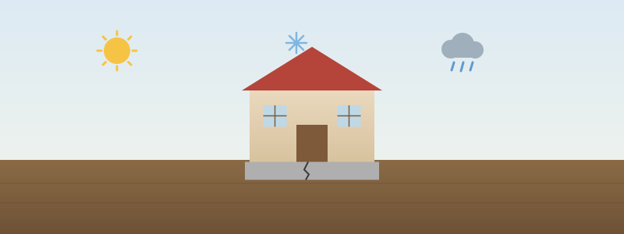
Your foundation faces a quiet, year-round battle with the weather. In Calgary, that battle is fierce because of clay soils and wild temperature swings.
Understanding weather-related foundation damage helps you catch small problems early, before they become costly repairs. Let’s walk through how each season stresses your foundation, and how to protect it.
Why Weather Matters for Your Foundation
Your foundation does not move on its own. The soil beneath it does, and weather drives that movement.
Most Alberta homes sit on clay-rich soil that swells when wet and shrinks when dry. That constant push and pull is the root of most seasonal foundation problems.
The bigger the moisture swing, the bigger the movement. That is why our climate is so hard on local foundations.
Concrete is strong under weight but weak under a sideways or lifting force. Shifting soil applies exactly that kind of force, which is why cracks appear where the movement is worst.
Spring Rain and Soil Saturation
Spring is wet, and wet soil is heavy soil. As snowmelt and rain soak the ground, water builds up against your foundation walls.
This creates hydrostatic pressure, a steady push from saturated soil. Over time, it can bow basement walls or force water through hairline cracks.
Rain foundation damage often starts small. Watch for damp basement corners and fresh cracks after a heavy spring storm.
Poor drainage makes it worse. Clogged gutters and flat grading send water straight to the base of your home.
Older Calgary homes are especially at risk. A tired weeping tile system can no longer carry water away, so it pools against the footings instead.
Summer Heat and Soil Shrinkage
Summer flips the problem. Heat and dry spells pull moisture from the soil, and the ground shrinks away from your footings.
When the soil pulls back, parts of your foundation lose their support. The structure settles into the gaps, which cracks concrete and parging.
Drought foundation issues show up as diagonal cracks near windows and doors. You may also spot stair-step cracks in exterior brick or block.
Thirsty tree roots speed this up. Large trees close to the house pull huge amounts of water from the soil.
The damage is often uneven. One corner may settle while another stays put, which twists the frame and jams doors in their openings.
Winter Freeze-Thaw Cycles
Alberta winters bring the hardest test. Water in the soil freezes, and freezing water expands by about nine percent.
That expansion lifts the ground in a process called frost heave. When it thaws, the soil drops and leaves voids under the foundation.
Chinooks make this worse. A single warm wind can thaw and refreeze the ground within days, repeating the cycle over and over.
Footings set below the frost line resist this best. Shallow slabs and garage pads are the most exposed.
You may feel the effects indoors first. A basement door that sticks in January but swings free by summer is a classic sign of frost heave at work.
How Different Climates Affect Foundations
Where you live shapes the risk. Here is a quick look at the main patterns.
| Climate | Main threat | Common sign |
| Wet and rainy | Soil saturation | Bowing walls and leaks |
| Hot and dry | Soil shrinkage | Settling and wall cracks |
| Freezing winters | Frost heave | Lifted, cracked slabs |
| Clay soil regions | Swell and shrink | Doors that stick |
Calgary sits in a tough spot. Clay soils and Chinook-driven freeze-thaw put our foundations under real stress.
That is why a fix built for a mild coastal home may not hold up here. Local repairs must account for both deep frost and heavy clay.
Seasonal Maintenance Tips
Good habits protect your foundation all year. Focus on water, since water controls the soil.
- Clean gutters and extend downspouts at least four to six feet from the house.
- Grade the soil to slope away, about six inches over the first ten feet.
- Water the soil during dry spells to keep moisture steady and prevent shrinkage.
- Keep large trees well away from the foundation, or add a root barrier.
- Seal small cracks early and watch them for any change.
Consistency is the goal. Soil that stays evenly moist moves the least.
When to Schedule Foundation Inspections
Some movement is normal, but some is a warning. Book an inspection if you notice these signs.
- Cracks wider than a quarter inch, or ones that keep growing.
- Doors and windows that suddenly stick.
- Floors that feel uneven or sloped.
A spring and fall check is smart in our climate. Always inspect after a flood or a deep freeze.
Catching a problem early keeps repairs simple. A sealed crack today can save you from a wall stabilization job later.
If you spot these signs, do not wait. The team at Alberta Pargin can trace the cause with professional foundation repair in Calgary.
FAQs About Weather Damage to Foundations
Can heavy rain really damage my foundation? Yes. Saturated soil creates hydrostatic pressure that can bow walls and push water through cracks. Good drainage is your best defense.
How does a dry summer cause foundation problems? Dry soil shrinks and pulls away from your footings. The foundation then settles into the gaps, which leads to cracks.
How often should I inspect my foundation in Alberta? Once in spring and once in fall works well. Add a check after a Chinook stretch or a hard freeze.
Conclusion: Protecting Your Foundation Throughout the Year
Weather and foundation damage go hand in hand, but you are not powerless. Manage the water, and you manage most of the risk.
Stay ahead of Alberta’s seasons with steady care and regular checks. When you need expert help, book foundation repair with Alberta Pargin and protect your home for years to come.
